
Needle breakage and sudden machine stoppages are among the most costly disruptions in modern textile manufacturing. For textile mill managers, knitting factory supervisors, and spare parts procurement teams, unexpected downtime directly translates to ruined fabric rolls, lower output, and inflated operating costs.
While a broken needle may seem like a random event, over 90% of operational faults follow specific mechanical patterns. Replacing broken needles without diagnosing the root cause only leads to repeated failures and accelerated wear on your cylinder and cams.
This diagnostic guide from EASTINO outlines a systematic troubleshooting sequence and preventative maintenance protocol to help your technical team locate root causes quickly and maximize machine efficiency.
The Root Cause Matrix: Diagnosing Stoppage Patterns
When an unexpected stoppage or needle failure occurs, begin by observing the physical distribution of the issue across the cylinder before making mechanical adjustments.
| Stoppage & Failure Pattern | Primary Mechanical Causes | Key Inspection Points |
|---|---|---|
| Repeated Breakage at a Fixed Position | Cam profile wear, damaged sinkers, foreign debris in cylinder slots, worn yarn guides. | Inspect section cams, sinker tracks, and cylinder grooves at that specific feeder point. |
| Random Needle Damage Across the Cylinder | Excessive yarn tension, untrimmed yarn knots, high yarn hairiness, lint buildup. | Check yarn tensioners, creel feeding paths, and yarn stop motion sensors. |
| Full-Circle Damage or Total Stoppages | Main drive desynchronization, cylinder/dial eccentricity, motor inverter overload, belt slippage. | Inspect main drive belts, gearboxes, frequency inverter error codes, and main motor load. |
| Single Isolated Needle Breakage | Needle fatigue, bent needle latches, localized thick yarn slubs, slot debris. | Replace damaged needle; clear cylinder slot; check yarn consistency. |
Standard 6-Step Troubleshooting Sequence
To minimize downtime, instruct your maintenance technicians to follow this strict outside-in inspection protocol rather than jumping directly to needle replacement:
1. Yarn & Feeder System
- Inspect yarn tension disks and storage feeders for smooth, stable yarn delivery.
- Clear lint and fly accumulation from yarn ceramic eyelets and stop-motion sensors to eliminate false auto-stoppages.
- Check for yarn slubs, knots, or high hairiness that cause latch slamming.
2. Needles & Latches
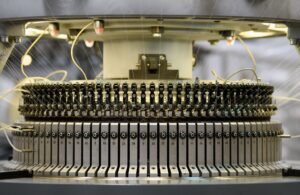
- Inspect needle hooks, latches, and butts for bending, excessive wear, or stiff movement.
- Critical Rule: Never mix different needle batches, lengths, or manufacturers within the same cylinder section.
3. Cams & Sinkers
- Check cam mounting screws for tightness and inspect cam tracks for grooves or high-impact burrs.
- Ensure sinkers move freely without binding or lint compaction in the sinker ring.
4. Yarn Feeding & Drive Belts
- Inspect feed wheels, quality adjustment pulleys (QAP), and timing belts for wear, oil contamination, or improper tension.
5. Main Drive & Synchronizing Systems
- Verify main motor performance, drive belt tension, gearbox lubrication, and cylinder-to-dial concentricity.
6. Lubrication & Electrical Protections
- Check oil reservoir levels, automatic oil pump discharge pressure, oiling nozzle positioning, inverter alarm logs, safety doors, and pneumatic system pressure.
Common Stoppage Alarms and Immediate Fixes
- False Yarn Breakage Alarms: Frequently caused by fly lint obstructing optical sensors, excessive yarn tension, or miscalibrated sensor sensitivity.
- Inverter Overload Alarms: Caused by over-tensioned drive belts, mechanical binding in main bearings, inadequate cylinder lubrication, or poor electrical cabinet heat dissipation.
- Low Oil / Oiler Pressure Alarms: Indicates oil pump failure, clogged oil distribution lines, or incorrect oil viscosity (use specialized needle oil).
- Air Pressure & Safety Interlock Alarms: Caused by loose safety door limit switches or low plant compressed air supply.
- Drive Belt Slippage: Results from insufficient tensioning, oil-contaminated belts, or worn pulley grooves.
Preventative Maintenance Schedules for Peak Efficiency
Implementing a structured maintenance routine prevents up to 80% of premature component failures.
Daily / Shift Checklist
- Clear fly lint and dust from yarn feeders, creels, and yarn guides using compressed air or vacuum systems.
- Verify automatic needle oiler reservoir level, spray nozzle alignment, and oil drip rates.
- Test yarn stop-motion sensors and safety door interlocks.
Weekly Maintenance
- Inspect cam locking screws, sinker clearance, and cylinder needle slots.
- Check drive belt tension, feed wheel condition, and oil filter cleanliness.
Monthly Deep Audit
- Inspect main drive gearboxes, motor bearings, frequency inverter cooling fans, and pneumatic seals.
- Measure cylinder and dial runout to ensure concentric alignment.
Proper Needle Replacement Protocol: Always install replacement needles matching exact factory height, gauge, and butt specifications.
Logbook Tracking: Maintain a needle breakage logbook. If needles repeatedly fail at the exact same feeder position, halt machine operation immediately to inspect the corresponding cams and cylinder tracks.
Essential Spare Parts Stocking: Maintain an inventory of high-wear components, including precision needles, cams, sinkers, yarn feed wheels, drive belts, and oil pump filters.
Upgrade Your Textile Production with EASTINO Machinery
Looking for high-precision, low-maintenance circular knitting technology? EASTINO supplies advanced EASTINO Circular Knitting Machines , precision-engineered EASTINO Cylinder Needles , and durable Sinker & Cam Spare Parts engineered for continuous high-speed fabric production.
- 📩 Facing persistent needle breakage or looking to optimize your mill’s output? Contact EASTINO’s textile engineering team today for technical support, maintenance guides, or a fast quotation on genuine spare parts!




.png)